July 24, 2026 · 2 min read
On the seriouness of a Mathematical Theorem
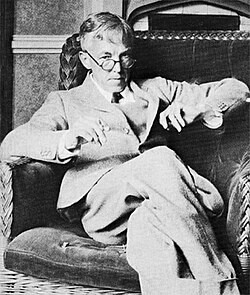
Hardy's incisive thoughts are inevitably handy to this day:
"A ‘serious’ theorem is a theorem which contains ‘significant’ ideas, and I suppose that I ought to try to analyse a little more closely the qualities which make a mathematical idea significant. This is very difficult, and it is unlikely that any analysis which I can give will be very valuable.
We can recognize a ‘significant’ idea when we see it, as we can those which occur in my two standard theorems; but this power of recognition requires a high degree of mathematical sophistication, and of that familiarity with mathematical ideas which comes only from many years spent in their company. So I must attempt some sort of analysis; and it should be possible to make one which, however inadequate, is sound and intelligible so far as it goes. There are two things at any rate which seem essential, a certain generality and a certain depth; but neither quality is easy to define at all precisely.
A significant mathematical idea, a serious mathematical theorem, should be ‘general’ in some such sense as this. The idea should be one which is a constituent in many mathematical constructs, which is used in the proof of theorems of many different kinds. The theorem should be one which, even if stated originally (like Pythagoras’s theorem) in a quite special form, is capable of considerable extension and is typical of a whole class of theorems of its kind. The relations revealed by the proof should be such as to connect many different mathematical ideas.
All this is very vague, and subject to many reservations. But it is easy enough to see that a theorem is unlikely to be serious when it lacks these qualities conspicuously; we have only to take examples from the isolated curiosities in which arithmetic abounds. I take two, almost at random, from Rouse Ball’s "Mathematical Recreations"
(a) 8712 and 9801 are the only four-figure numbers which are integral multiples of their ‘reversals’:and there are no other numbers below 10,000 which have this property.
8712 = 4 ⋅ 2178, 9801 = 9 ⋅1089
(b) There are just four number (after 1) which are the sums of the cubes of their digits, viz.
153 = 1^3 + 5^3 + 3^3
370 = 3^3 + 7^3 + 0^3
371 = 3^3 + 7^3 + 1^3
407 = 4^3 + 0^3 + 7^3
These are odd facts, very suitable for puzzle columns and likely to amuse amateurs, but there is nothing in them which appeals much to a mathematician. The proofs are neither difficult nor interesting—merely a little tiresome. The theorems are not serious; and it is plain that one reason (though perhaps not the most important) is the extreme speciality of both the enunciations and the proofs, which are not capable of any significant generalization."