November 23, 2026 · 3 min read
Cognitive decline and off-target verbosity
We all know someone who just can't leave the proverbial podium across all walks of life.
The commentator reliving his playing days instead of the match. The star in every ad break selling cement, cola, and chyawanprash in the same breath. The new retiree with a podcast and opinions on everything. The uncle who won't give back the wedding mic. The self-proclaimed 'ageless' aunt with Insta stories posted by the hour.
And then there's the master of the "subtle" humblebrag.
The veteran host interviewing a celebrated director: "The songs from your super hit film are everywhere! I hear them at every function I attend… London, New York, Dubai, that gala in Singapore last month…" The director came to talk about his craft. The audience now MUST hail the host's globe-trotter status.
Other classics: "My hectic travel schedule has cruelly shrunk my reading time.", "Would have loved to share more but for this jet lag, sorry guys", and "When I was in Davos, someone asked me…"
They think it's a gentle hint. It's actually a billboard.
Then there's the Gen Z cosplay: ten social media stories a day, gym selfies at 60, reels of trends that died months ago, and "no cap", "situationship" and "Delulu" used for effect.
Plus, the newly-born AI-powered thought leader, whose 800-word posts on "navigating the leadership landscape" (replace leadership with anything you like) are supposed to make the world wiser like never before.
Most of this is normal.
Wanting to matter is deeply human, especially after retirement or a loss of status. Ego doesn't need a diagnosis.
But there's nothing funny about it (and hence this post is not part of the 'Humor in Casual Wear' newsletter.)
This isn't only a 70-plus story any more.
Many 40-somethings already tell the same three stories at every dinner, and a few 30-somethings sound like they're writing their memoirs.
Science suggests a basis.
A 2026 study in Nature Medicine, using health data from more than 164,000 people in the US and UK, found that people born after 1965 are ageing faster biologically than earlier generations did at the same age, and linked this to a higher risk of early-onset disorders.
Young-onset dementia (before 65) is also rising in several countries. The usual suspects are stress, poor sleep, obesity, and sedentary, screen-heavy lives.
So the warning signs below may start showing up in our 40s and 50s, not our 70s.
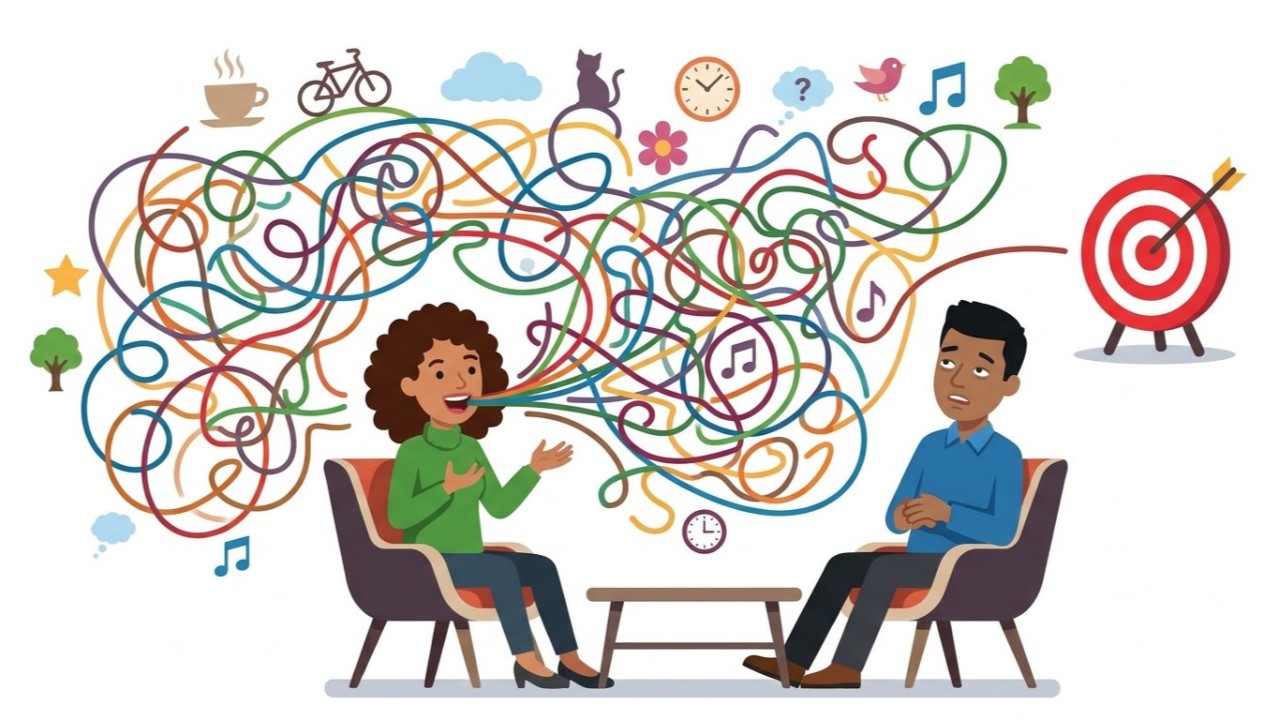
Researchers have a name for the endless ramble: "off-target verbosity".
As we age, the brain can get less good at filtering out loosely related thoughts, so every memory, and every name-drop, gets said out loud.
Signs that go beyond normal ageing:
- The same story, to the same people, again
- Struggling with once-easy tasks like bills or planning
- Losing words mid-sentence
- Poor judgement, such as scams, impulsive spending, or oversharing online
- Withdrawing, or personality changes like irritability or apathy
It's a red flag when the behaviour is new and out of character, when they can't see their own lapses (they're sure the hint was subtle), or when dominating the conversation seems to be covering up gaps.
Nothing against AI and social media. They surely help people with connection and expression. But a polished feed can also hide a real struggle.
If someone's online life is brilliant but he or she can't discuss it in person, that gap needs a deeper diagnosis.
Of course, hearing loss, depression, thyroid problems, low B12 and medication side effects can all mimic decline, but that doesn't eliminate the need for paying more attention to the quality of sleep, volition, life and play.
And we need to be kind for our own sake.
One may be playing the doctor, but could actually be hosting a patient in his or her own body and mind, and sooner than thought.